Our first Queens of Parang
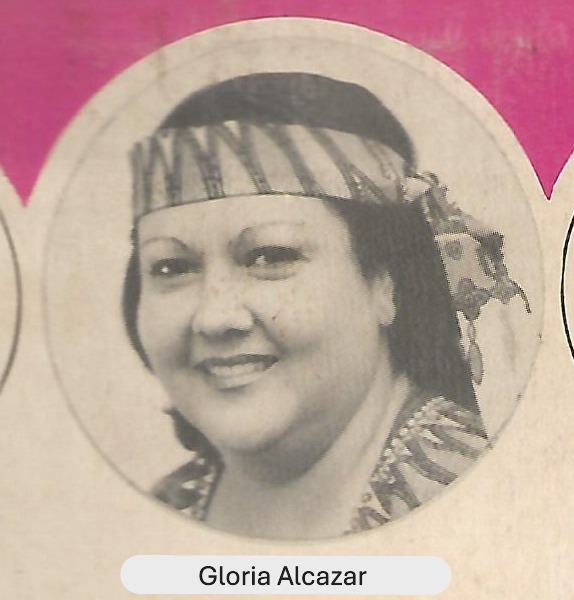
Gloria Alcázar: (1940 – 1980) A native of Maracaibo, Venezuela whose father was Trinidadian and mother was Colombian, came to live in Trinidad and was invited by Wayne Flores, the leader of San José Serenaders to perform with the band. At that time parang bands in Trinidad had only male lead singers, so she became the first female lead singer to perform parang on a stage for the public. Armed with her cuatro, a sweet, melodious and magical voice and a style that was infinitely hers, Gloria revolutionized the parang of the day by introducing new modern Gaita songs from Maracaibo. Besides being an excellent cuatrista and soloist, she was a composer as well. Three of the songs on the band’s 2nd LP are her original compositions. While “Viva” and “Cantemos pastores” were written for competitions, “Mi negrito” is a song of love and passion. This made her an inspiration for other female soloists who tried to imitate her clear pronunciation and musical style. Her effervescent personality made her very popular in the world of parang and her songs are still sung today.
Photo Credit: Harold Prieto – Penta San Jose Serenaders – 2nd LP
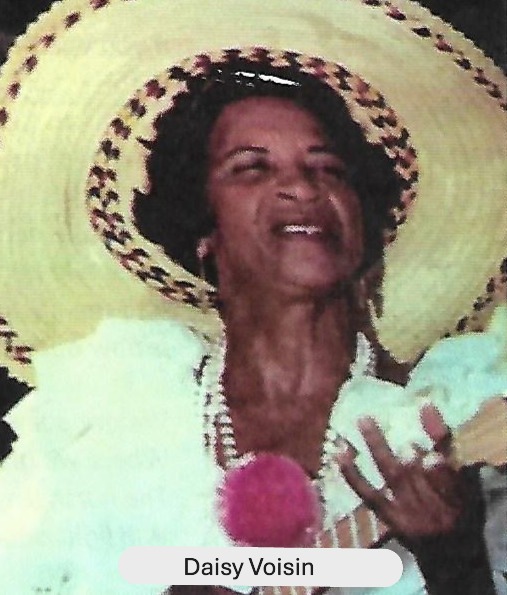
Daisy Voisin: (1924 – 1991) Born in Erin, in the south of Trinidad, Daisy grew up in a parang culture. Although she was not fluent in Spanish, she learned the lyrics of a number of parang songs from her Cocoa Panyol stepfather. She diligently wrote out the lyrics and imitated the sounds of the Spanish she heard, without always understanding the meaning or knowing the correct syntax and pronunciation. Daisy’s entry into the parang arena as a lead singer came in 1971 when as a member of the chorus of the Siparia Village Council group taking part in the Prime Minister’s Best Village Competition, she replaced the lead singer who was ill and her performance made a great impression. As the lead singer of her band, La Divina Pastora, with her lovely and captivating voice, and her dynamic stage performances holding her bouquet of flowers, she played a key role in making parang popular. Some of her most famous songs played every Christmas are “Alegría, Alegría” (composed by William and Barbara Joseph), “A la Media Noche” and “El Nacimiento.” She won many awards for her contribution to the parang artform.
Photo Credit: Parang Cancionero Sylvia Moodie-Kublalsingh
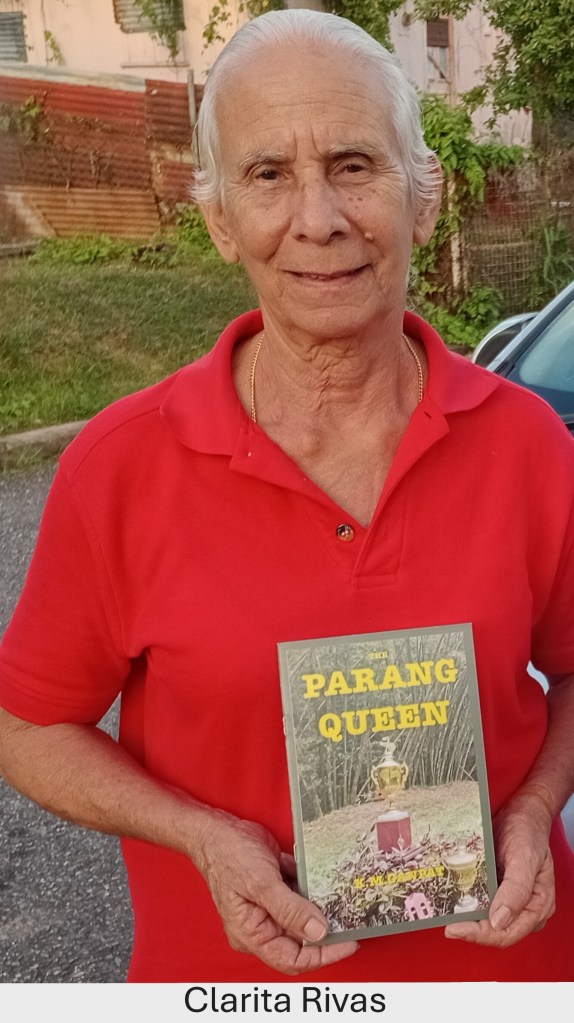
Clarita Rivas: (1948 -) Born and still living in St. Joseph, (the former capital of Trinidad), Clarita was nurtured in the Cocoa Panyol parang culture and is a versatile parrandera. She is not a fluent Spanish speaker like her forefathers, but she is a very skilful musician, able to play the cuatro, guitar, mandolin, maracas and box bass. She is also a composer of both music and lyrics. Clarita has achieved the distinction of being the first Parang Queen, (the coveted title for the best female soloist in national competitions) when she won the title at a Kiwanis Club Competition in 1971. Her areas of expertise are the cuatro and the maracas and she has won numerous awards. Clarita’s devotion to traditional, authentic parang can be seen in her mentoring of younger players and her invaluable assistance both to individuals as well as school and adult bands. She has been a founder and member of many bands including Los Pajarillos, Los Pavitos, Los Vivantes, Los Compañeros, Los Números, Nuestra Cosa, and Una Sola Voz to name a few. Her dedication to the parang artform must be recognized and acclaimed.
We salute Gloria Alcázar, Daisy Voisin and Clarita Rivas for leading the way for women to enter the formerly male dominated parang arena. Their immeasurable contribution has made an enormous impact towards ensuring the future of the parang artform and must never be underestimated.

